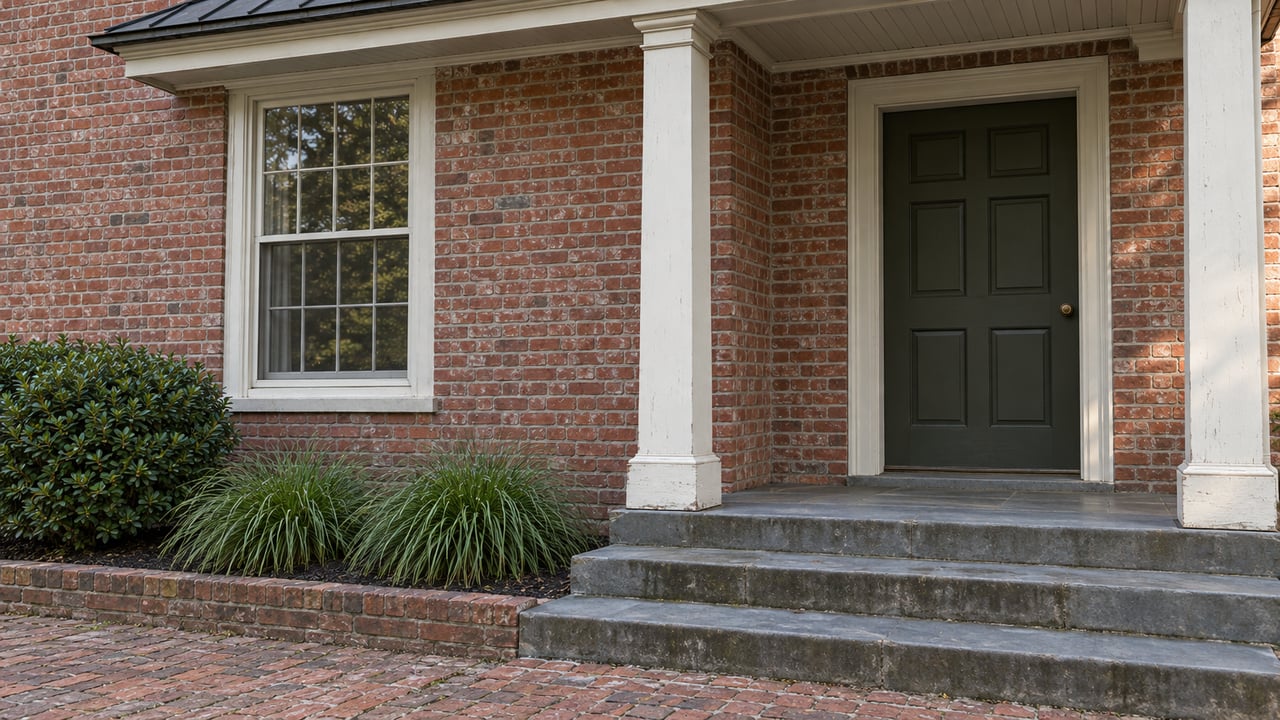
Davidson Rewrote Its Historic District Rulebook for the First Time Since 2009. Here's Which Homes It Actually Covers.
October 1, 2026
October 1, 2026
Walk down North Main Street in Davidson and every house reads the same way: deep porches, weatherboard siding, mature shade trees, the kind of streetscape that looks protected because it looks old. It is not one thing, legally. Some of those houses sit inside a zoning overlay that gives the Town of Davidson authority over their windows, their paint, their additions, and their demolitions. Others sit just outside that overlay, inside a much larger national designation that carries no such authority at all. The two labels get used almost interchangeably in casual conversation about the neighborhood. They are not interchangeable on paper, and the Town just finished rewriting the paper for the first time in sixteen years.
Davidson's Historic Preservation Commission adopted a new set of Historic District Design Standards on July 16, 2025, replacing a document that had governed every renovation decision in the local historic district since 2009. The rewrite followed the Town's first-ever Historic Preservation Plan, adopted by the Board of Commissioners in January 2023, which flagged the 2009 standards as outdated given how development practices had shifted in the intervening years.
The Town hired Frazier Associates, a Staunton, Virginia firm specializing in historic district standards, to lead the update. The process ran over roughly two years: a windshield survey of the district in October 2023, a public workshop for property owners at Davidson Town Hall in February 2024, and a series of Historic Preservation Commission reviews through the first half of 2025 before adoption that July. Anyone who bought a home in the district before mid-2025, or who is working from a contractor's memory of "the old rules," is now referencing a standard the Town no longer uses to evaluate applications.
The confusion that matters most for a buyer or seller isn't the design standards themselves. It's figuring out which properties they apply to at all. Davidson has two overlapping but legally distinct historic designations, and only one of them creates an enforceable obligation.
| Designation | What it recognizes | Requires Town approval for exterior work | Approximate coverage |
|---|---|---|---|
| National Register Historic District | Federal and state recognition of historic significance | No | Most of "old" Davidson, including the college campus and surrounding blocks |
| Local Historic District (zoning overlay) | Town-administered protection with legal design review | Yes, for most exterior changes | The two to three blocks that make up downtown, parts of the historic college campus, and North Main Street |
The Town's own framing draws this line explicitly. A large share of historic Davidson sits inside the National Register District, but it's the smaller local overlay that carries the actual legal provisions guiding repairs and new construction. A home can be historic in the national sense, sit two blocks from Main Street, and never trigger a Town review for a new roof or a repainted door. A different home, just as old, can sit inside the overlay and require sign-off before that same roof gets replaced. Nothing on a typical listing sheet tells you which situation you're in. That distinction lives on the Town's zoning map, not in the marketing copy.
For property inside the local overlay, the mechanism is the Certificate of Appropriateness, or COA. The Town's own guidance is direct about scope: many exterior changes in the local historic district require a COA before work begins, regardless of whatever other town or county permits are also required. Routine maintenance is exempt.
Beyond that, the process splits into two tracks with very different timelines. Minor Work applications are reviewed and approved directly by Town staff. Major Work applications go to the Historic Preservation Commission itself, decided at a quasi-judicial evidentiary hearing held the third Wednesday of every month, with applications due at least four weeks ahead of that meeting. A property owner who assumes a project qualifies as minor and later learns it needs Commission review can lose a month or more simply waiting for the next hearing date. For anyone timing a renovation around a closing date or a rental turnover, that gap is worth planning around before the offer goes in, not after.
North Main Street illustrates the gray zone better than any other part of town. In 2019, the Town commissioned historic preservation consultant Mary Ruffin Hanbury of Hanbury Preservation Consulting to study whether a stretch of North Main Street, already part of the National Register District, should be pulled into the local overlay as well. Her firm produced a designation report, the State Historic Preservation Office reviewed it in October 2019, and the Historic Preservation Commission formally accepted the report that November.
Accepting a report is not the same as adopting an overlay. A district expansion still has to move through Davidson's map amendment process, which requires a Planning Board recommendation, a public hearing, and final approval from the Board of Commissioners. As of the Town's most recent public documentation, that process had not been completed. Houses along the proposed North Main Street Extension currently sit in the same position as the rest of the National Register footprint: recognized as historic, but not yet subject to the overlay's design review. That could change with a future vote. A buyer evaluating a North Main Street property today is evaluating it under the rules that exist now, not the ones that may eventually apply if the expansion moves forward.
There is a financial upside tied to formal designation that gets less attention than the review process. An owner of a property individually designated as a historic landmark, a separate status from simply sitting inside the district, can apply for an automatic property tax deferral of 50 percent, or 30 percent if the designation covers exterior features only. The deferral runs with the property, meaning it transfers to a subsequent owner as long as the landmark status stays in place.
This is not automatic for every home inside the local historic district. It applies specifically to properties that have gone through individual landmark designation, a distinct process from district membership. For an owner weighing whether that additional designation is worth the added layer of review, the tax deferral is the number that belongs on the other side of the ledger from the COA requirements.
The practical version of all of this comes down to a short list of questions worth asking before writing an offer on anything near downtown Davidson, not after.
Confirm whether the parcel sits inside the local historic district overlay or only inside the National Register District. The Town's planning staff can answer this directly against the current zoning map, and it's a five-minute question that changes the entire renovation math.
If the property is inside the overlay, ask whether a planned project would likely qualify as Minor Work or Major Work before assuming either. The four-week lead time on Major Work applications is a real scheduling constraint, not a formality.
Look at what compliant work in the district actually looks like. Davidson-based Nicole Perri Architecture has documented recent projects inside this exact context, including a Georgian Revival renovation within walking distance of Main Street and the conversion of the historic Armour Street Theater into an event space for the Davidson Community Players. Projects like these show what the Commission has approved under the old standard and give a useful reference point for what the new one is likely to expect.
Ask about landmark status separately from district status if the tax deferral matters to the purchase decision. The two designations solve different problems and carry different obligations.
None of this makes a historic district property harder to love. It makes the difference between a renovation that moves on schedule and one that stalls waiting for a hearing date that was never on anyone's radar until the contractor asked for it.
Does being in the National Register Historic District mean I need Town approval to renovate? No. The Town's own materials describe the local historic district, not the National Register District, as the designation that carries legal design review authority. Most of "old" Davidson falls under the National Register without the added local requirement.
How do I find out which designation applies to a specific address? Davidson's planning staff can confirm zoning overlay status against the current map. This is worth doing before submitting an offer if renovation plans are part of the purchase decision.
How long does a Certificate of Appropriateness review take? Minor Work applications are handled at the staff level and generally move faster. Major Work applications go to the Historic Preservation Commission, which meets the third Wednesday of each month and requires applications at least four weeks in advance.
Is the North Main Street Extension part of the local historic district now? Not as of the Town's most recent public documentation. The designation report was accepted in 2019, but the map amendment process that would formally add it to the overlay had not been completed.
Buying or renovating inside Davidson's historic core comes with real upside and real process, and the two are easier to weigh once the paperwork behind them is clear. If you're looking at a property near Main Street and want a straight read on what applies to it, Rachel Mangiapane is glad to help you sort it out before you write an offer.
Every client deserves an advisor who takes the time to understand the details before offering guidance. I believe the best decisions are informed decisions, which is why I approach every transaction with thoughtful preparation, local expertise, and careful market analysis. Whether you're buying your first home, searching for a waterfront retreat, or preparing to sell, I'm committed to providing personalized guidance and exceptional care so you can move forward with clarity and confidence.
Rachel Mangiapane
19826 NORTH COVE RD CORNELIUS NC 28031 OPEN DAILY: 9AM – 5PM