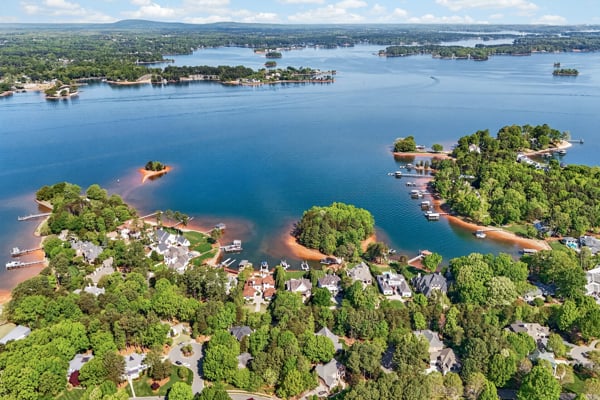
Lake Norman Dock Permits and Waterfront Buying Guide
Lake Norman Rachel Mangiapane July 24, 2026
Lake Norman Rachel Mangiapane July 24, 2026
Buying a waterfront home on Lake Norman involves more than evaluating the house, lot size and view. The shoreline, dock, water access, property boundaries and applicable permitting requirements can materially affect how a property may be used, improved and ultimately resold.
Two homes may both be described as “waterfront,” yet offer very different ownership experiences. A thoughtful evaluation should consider not only the quality of the home, but also the usability and long-term implications of the waterfront itself.
Who Controls the Lake Norman Shoreline?
One of the most important concepts for buyers to understand is that owning property beside Lake Norman does not necessarily provide unrestricted control over everything between the home and the water.
Depending on the property and proposed activity, shoreline-related matters may involve:
· Duke Energy Lake Services
· North Carolina environmental requirements
· The applicable county or municipality
· Recorded plats and easements
· Private covenants and restrictions
· Existing permits and prior approvals
Activities that may require review or approval can include:
· Constructing, replacing or modifying a dock
· Stabilizing or altering the shoreline
· Dredging near a dock or access area
· Clearing vegetation or disturbing land near the water
· Adding a pool, patio, outdoor kitchen or other improvement
· Repairing or replacing an existing shoreline structure
The specific answer is property-dependent. An improvement permitted on one Lake Norman property may not be permitted - or may be treated differently - on another.
Lake Norman Dock Permits and Eligibility
A private dock can be one of the most valuable features of a Lake Norman waterfront home, but buyers should not assume that:
· Every waterfront lot qualifies for a dock
· An existing dock can automatically be enlarged
· A covered area, lift or other feature can be added
· An older dock can be replaced in the same configuration
· A permit tag establishes complete current compliance
· A structure that has existed for many years may be freely altered
Dock eligibility and permitted improvements may depend on factors such as shoreline configuration, subdivision history, recorded plats, environmental classifications, existing permits and current shoreline-management standards.
Older docks and shoreline structures may have been approved under rules that differ from today's requirements. In some circumstances, an existing structure may be allowed to remain while a proposed modification could trigger additional review.
For that reason, buyers should understand the distinction among a dock that is:
· Existing
· Permitted
· Compliant
· Repairable
· Replaceable
· Modifiable
Those terms are related, but they are not interchangeable.
How to Review an Existing Dock Permit
When purchasing a Lake Norman property with an existing dock or shoreline improvement, buyers should seek available documentation showing what was approved and whether later modifications were properly addressed.
The physical presence of a dock does not, by itself, answer every permitting question. Permit records, ownership information, site plans and the existing structure may need to be reviewed together.
Questions to investigate can include:
· Is there a permit associated with the structure?
· Does the current dock appear to match the approved configuration?
· Is the permit properly associated with the current property owner?
· Were later additions or alterations included in the approval?
· What process would apply if the dock needed renovation or replacement?
· Is further inspection or agency review advisable before closing?
These questions should be addressed early, particularly when a private dock is essential to the buyer's decision.
Evaluating Water Depth on Lake Norman
Water depth is an important consideration, especially for buyers who own - or plan to own - a larger boat. However, depth at the end of the dock should not be evaluated in isolation.
A thoughtful Lake Norman waterfront assessment may also consider:
· Depth approaching and surrounding the dock
· Cove width and configuration
· Access to deeper or more open water
· Seasonal lake-level variation
· Sediment accumulation
· Nearby bridges or navigational constraints
· Dock placement and orientation
· Boat traffic and wake exposure
· Potential limitations on future dredging
A measurement taken on one day provides useful information, but buyers should understand the conditions under which it was taken and whether those conditions are typical.
The intended boat also matters. Water access that works well for a smaller boat may not be appropriate for a deeper vessel.
Can You Dredge at a Lake Norman Property?
When a Lake Norman waterfront property has shallow water, buyers sometimes assume the area can simply be dredged.
In reality, dredging can involve several layers of agency review and environmental consideration. Whether dredging is available, appropriate or economically practical may depend on the property, the purpose of the work and the requirements in place at the time.
A buyer considering a property where dredging would be necessary should investigate feasibility during due diligence rather than relying on an assumption that approval will be available after closing.
Shallow water should therefore be viewed as a property condition requiring investigation - not as a problem that can automatically be corrected.
Lake Norman Riparian Buffers and Outdoor Improvements
A lakefront yard may not be as fully usable as it initially appears.
North Carolina maintains riparian-buffer protections along portions of the Catawba River system, including Lake Norman. These protections are intended to preserve vegetation, reduce erosion and help protect water quality.
Depending on the property and proposed project, buffer and setback requirements may affect plans involving:
· Pools
· Patios and terraces
· Outdoor kitchens
· Grading
· Retaining walls
· Removal of mature vegetation
· Pathways to the water
· Shoreline stabilization
· Significant landscaping changes
Local requirements may also apply, and some counties or municipalities may be more restrictive than others.
When outdoor improvements are important to a buyer, it is not enough to determine that the lot appears large. The location of the home, property boundaries, shoreline or project boundary, buffer areas, septic components, easements and proposed improvement should be evaluated together.
Shoreline Stabilization, Riprap and Erosion
The condition of the shoreline can affect appearance, maintenance, erosion and future expense.
Lake Norman buyers should examine whether a property has natural shoreline, riprap, a seawall or another stabilization method and determine whether any existing work appears properly documented and maintained.
Visible conditions worth investigating may include:
· Erosion or loss of soil
· Displaced stone
· Undermining near steps or pathways
· Deteriorated walls or shoreline structures
· Drainage directed toward the water
· Improvised or undocumented improvements
· Vegetation removal that may have affected stability
Shoreline work should not begin until the owner has determined which approvals may be required.
Surveys, Property Boundaries and Duke Energy Project Lines
The visible water's edge is not necessarily the same as the property boundary or the applicable regulatory line.
A recorded plat, current survey, geographic information system overlay and permit documentation can help illustrate the relationship among:
· The privately owned parcel
· Duke Energy's project boundary
· The shoreline
· Buffer areas
· Easements
· Existing improvements
· Septic fields or repair areas
· Impervious Allocation
These records can be particularly important when a home, pool, terrace, retaining wall or other improvement appears close to the lake.
A buyer should avoid relying solely on aerial photographs, tax maps or the apparent mowing line when evaluating where improvements may be located.
Boating Access and Waterfront Usability
A beautiful view does not always mean the property provides equally strong boating access.
Buyers should consider how the property connects to the broader lake, including:
· Distance to open water
· Cove depth and width
· Bridge clearances
· Narrow or congested access areas
· Proximity to marinas and fuel
· Travel time to preferred lake destinations
· Wake and traffic conditions
· Ease of navigating during lower lake levels
These practical factors may influence how often the waterfront is used and how desirable the property may be to future buyers.
View Direction, Sun Exposure and Privacy
The orientation of a Lake Norman home can affect the daily experience of the property.
Considerations may include:
· Morning versus afternoon sun
· Sunset or sunrise views
· Glare across the water
· Summer heat on outdoor living areas
· Prevailing wind
· Neighboring docks and sightlines
· Privacy from boat traffic
· Seasonal changes in the view
There is no single ideal orientation for every buyer. The best exposure depends on how the buyer hopes to use the home and outdoor spaces.
How Waterfront Conditions Affect Resale Value
Lake Norman buyers often pay meaningful premiums for attributes such as:
· Broad or long-range views
· Deep and usable water
· A compliant private dock
· Convenient access to open water
· Privacy from neighboring docks
· Favorable sun exposure
· A stable, attractive shoreline
· Flexible outdoor-living potential
Conversely, uncertainty surrounding a dock permit, restricted improvement potential, shallow access or shoreline issues can affect buyer confidence and future marketability.
The goal is not simply to confirm that a property is technically waterfront. The goal is to understand the quality, usability and long-term implications of that waterfront.
Frequently Asked Questions About Lake Norman Waterfront Property
Does every Lake Norman waterfront lot qualify for a dock?
No. Dock eligibility may depend on the individual property, shoreline characteristics, subdivision history, environmental considerations, existing approvals and current requirements. Buyers should independently verify eligibility rather than relying solely on a listing description or informal representation.
Does a dock permit automatically transfer when a home is sold?
Permit records, ownership information and any applicable transfer procedures should be reviewed during the transaction. Current requirements should be confirmed directly with Duke Energy Lake Services.
Can an existing Lake Norman dock be enlarged or replaced?
Possibly, but the existence of a dock does not guarantee approval for every proposed alteration. The existing structure, permit history, shoreline conditions and current requirements should be evaluated before plans or costs are assumed.
How should buyers evaluate water depth?
Buyers should consider depth at and around the dock, access to deeper water, seasonal conditions, sediment and the requirements of their intended boat. One isolated measurement may not provide a complete picture.
Can a buyer build a pool near the Lake Norman shoreline?
The answer depends on the property boundaries, applicable buffer and setback areas, plat history, septic components, easements and local regulations. A property-specific review is essential before assuming that a pool or other outdoor improvement will be permitted.
Can vegetation be removed to improve a Lake Norman view?
Vegetation removal near the shoreline may be restricted or require approval. Buyers and owners should confirm current requirements before removing trees, understory growth or other vegetation within a protected area.
A Property-Specific Review Is Essential
Shoreline rules, application procedures and agency interpretations can change. Requirements may also differ based on a property's location, subdivision history, existing approvals and the work being proposed.
Before relying on general information, buyers and sellers should confirm current requirements directly with Duke Energy Lake Services, the appropriate state and local authorities, and qualified surveyors, engineers, contractors, environmental professionals or attorneys as appropriate.
As a real estate advisor, my role is to help clients:
· Recognize the right questions
· Locate and review relevant records
· Identify potential areas of concern
· Consider how waterfront conditions may affect value
· Engage the appropriate specialists before important decisions are made
Considering a Lake Norman Waterfront Property?
Every shoreline is different. A beautiful view is only one part of the evaluation.
I help Lake Norman buyers and sellers consider the dock, shoreline, water access, permitting history, outdoor-use potential and resale implications that may not be immediately apparent during a showing or from a listing description.
For property-specific guidance, contact Rachel Mangiapane to schedule a confidential Lake Norman waterfront consultation.
About Rachel Mangiapane
Rachel Mangiapane advises buyers and sellers of waterfront, custom and distinctive homes across Davidson, Cornelius, Huntersville and the greater Lake Norman area.
Her approach emphasizes careful property evaluation, thoughtful due diligence, strategic analysis and long-term resale considerations.
This article is provided for general educational purposes only and does not constitute legal, engineering, environmental, surveying or permitting advice. Rules, procedures, agency interpretations and property conditions may change. Buyers and property owners should confirm current requirements directly with the applicable agencies and qualified professionals before making decisions, beginning work or relying on any permit or improvement assumption.
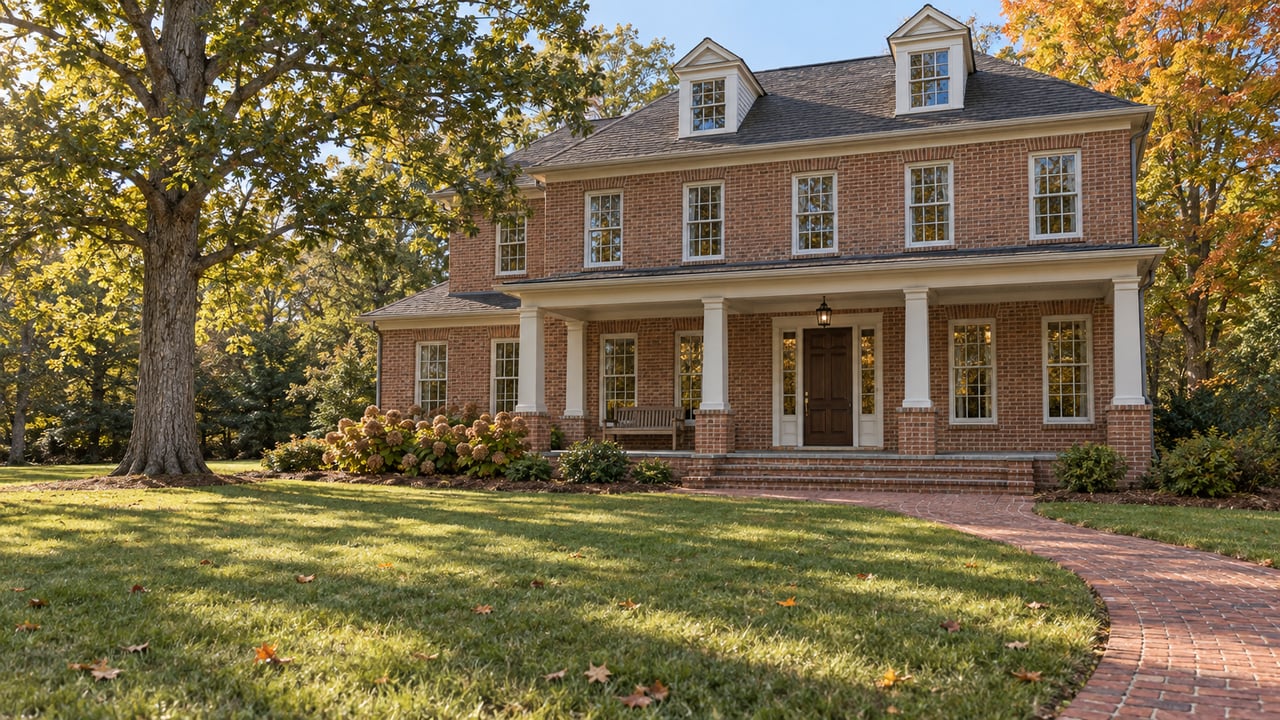

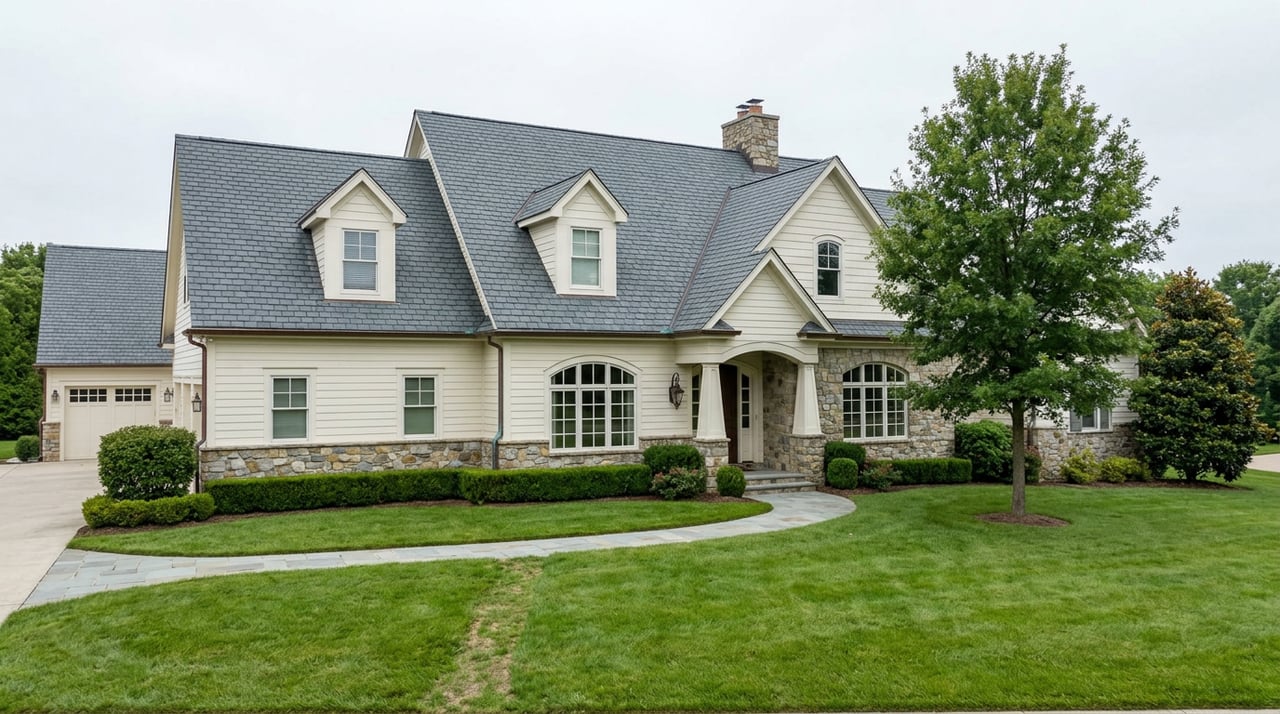
Every client deserves an advisor who takes the time to understand the details before offering guidance. I believe the best decisions are informed decisions, which is why I approach every transaction with thoughtful preparation, local expertise, and careful market analysis. Whether you're buying your first home, searching for a waterfront retreat, or preparing to sell, I'm committed to providing personalized guidance and exceptional care so you can move forward with clarity and confidence.

Rachel Mangiapane
19826 NORTH COVE RD CORNELIUS NC 28031 OPEN DAILY: 9AM – 5PM