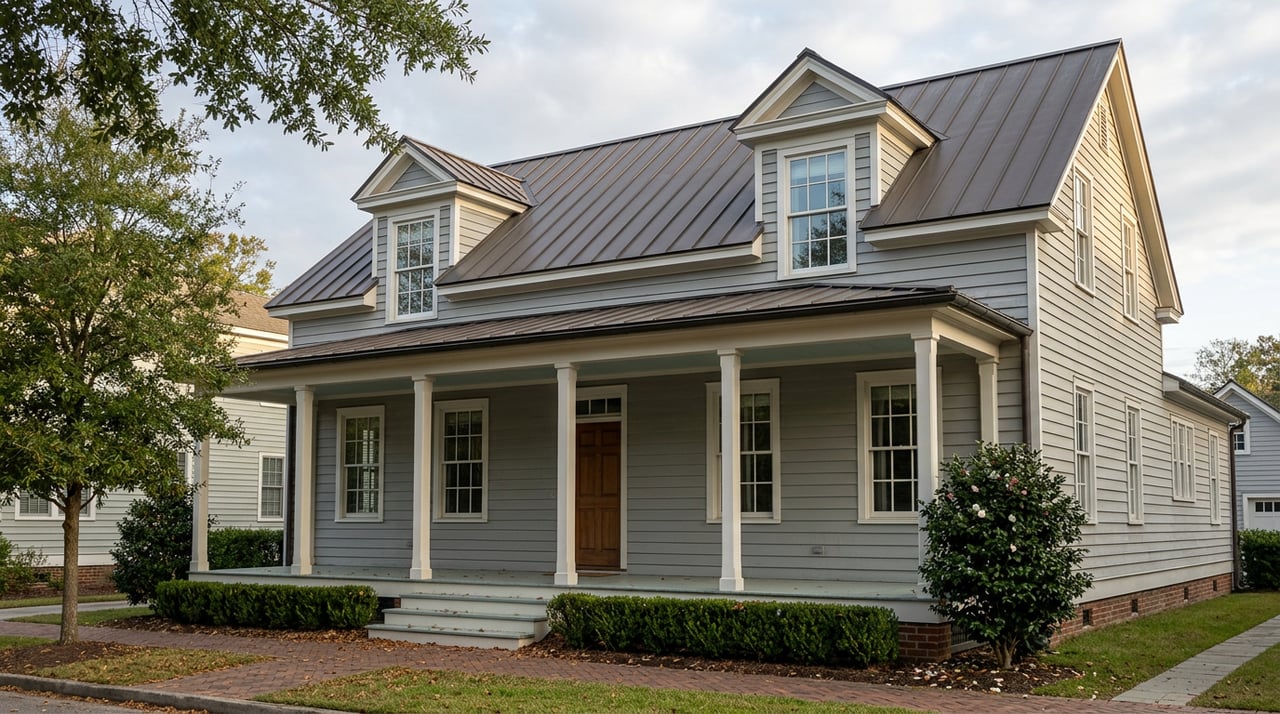
Davidson’s Two Historic Districts: What Buyers Should Know
September 3, 2026
September 3, 2026
A listing agent describes a house as being in "historic downtown Davidson." So does the one two blocks over on the same street. Both descriptions are accurate. The Town of Davidson requires approval before the owner of only one of those two houses can replace a window, rebuild a porch, or add a dormer.
That gap between marketing language and regulatory reality is the thing that catches buyers off guard after closing, not before. Davidson has two separate designations that both get called "historic," and they do almost nothing alike. One is a federal recognition. The other is a town zoning overlay with a commission, a hearing calendar, and a certificate you legally need before touching the exterior. If you're buying, selling, or planning to renovate anywhere near downtown Davidson or North Main Street, knowing which one applies to your address matters more than the square footage.
Much of what people mean when they say "old Davidson" sits inside the National Register Historic District, a federal designation that acknowledges architectural and historical significance. It carries prestige. It can open the door to certain tax credit programs for qualifying rehabilitation work.
The Local Historic District is a different animal entirely. It's a zoning overlay, an amendment to Davidson's planning ordinance, first adopted by the Town of Davidson in 1989 and enforced ever since by the Davidson Historic Preservation Commission. Owners of property inside this smaller boundary are required to get approval for many exterior changes in the form of a Certificate of Appropriateness. That's the mechanism with teeth. It's also the one buyers most often miss, because a listing rarely draws the line between "historic-sounding neighborhood" and "regulated zone."
The footprint of the Local Historic District is smaller than most people assume. It runs through roughly two to three blocks that make up downtown, parts of the historic Davidson College campus, and extends north along North Main Street. That's it. A charming cottage a few streets outside that boundary can be just as old, just as photogenic, and completely outside the commission's reach.
The boundary has also moved before, and it can move again. Back in 2019, the town's Historic Preservation Commission accepted a designation report recommending an expansion known as the North Main Street Extension, and the town formally added that stretch to the local district in 2020. The town has said publicly that it continues to explore further expansion, with the goal of protecting more structures over time. If you're buying near the edge of the current boundary, the rules governing your renovation plans could tighten before you've finished unpacking.
Inside the Local Historic District, most exterior work sorts into one of two tracks. The Town of Davidson says Minor Work applications are reviewed and approved directly by town staff. Major Work applications go to the Historic Preservation Commission itself.
That commission doesn't rubber-stamp on a rolling basis. The commission holds a hearing on the third Wednesday of every month, and the Town of Davidson application process requires Major Work applications to be submitted at least four weeks ahead of that meeting date. Miss the window and your project waits for the next month. Based on that schedule, an application submitted by roughly September 23, 2026, would likely land on the October 21 hearing, while anything filed after that rolls to November 18. The math is simple, but it's not something most buyers price into their post-closing plans.
The process also isn't quiet. Major Work applications require a public notice sign posted on the property itself, along with notice letters mailed to owners of adjacent parcels. If you're planning to reshape a historic home's front elevation, your neighbors will know about it before the commission votes.
It would be easy to assume this kind of preservation review exists mostly on paper, rarely exercised. It doesn't. The commission was still actively designating landmarks as recently as October 14, 2025, when it approved landmark status for the Davidson Baptist Chapel, also known as the Armour Street Theatre. The town adopted its first-ever Historic Preservation Plan in January 2023, laying out a ten to fifteen year roadmap for expanding designations and refining design standards. That plan led directly to a 2023-2024 project with the preservation architecture firm Frazier Associates to rewrite design standards that had gone untouched since 2009. This is a system that's actively being built out, not one coasting on decades-old rules.
Here's a detail that cuts the other way and matters just as much for sellers. If a property carries individual landmark status, not just district membership, the owner may qualify for an automatic ad valorem tax deferral of 50 percent, or 30 percent if the designation covers exterior features only. That deferral transfers to future owners as long as the property retains landmark status. It's a real financial benefit tied to the house, not the person who lives in it. But it also means a buyer inherits the same review obligations that came with the deferral. You don't get the tax break without also getting the commission's oversight.
If you're evaluating a home anywhere near downtown Davidson, North Main Street, or the college, a few questions are worth asking before you get emotionally attached to a renovation plan:
None of this makes buying inside the district a bad idea. Local historic district review exists in part because it protects the very character that makes these homes desirable in the first place, and unmanaged change nearby can undercut the value of a careful renovation next door. But charm and predictability aren't the same thing, and the calendar the commission runs on doesn't bend for a closing date.
Does every home described as "historic" in Davidson require a Certificate of Appropriateness? No. Only properties inside the smaller Local Historic District overlay are subject to COA review.
Can I find out which district a specific address falls into before I make an offer? Yes. The town's planning department can confirm district boundaries and whether a given address is subject to COA review, and this is worth confirming before finalizing any renovation timeline tied to your offer.
Historic Davidson rewards buyers who ask the right question before they fall in love with the house. If you're weighing a downtown property, whether it's inside the review boundary or just carries the name, Rachel Mangiapane can walk through what the district actually requires before you write an offer. Let's Connect.
This article is general information, not legal, tax or financial advice. Consult a qualified professional about your situation.

Every client deserves an advisor who takes the time to understand the details before offering guidance. I believe the best decisions are informed decisions, which is why I approach every transaction with thoughtful preparation, local expertise, and careful market analysis. Whether you're buying your first home, searching for a waterfront retreat, or preparing to sell, I'm committed to providing personalized guidance and exceptional care so you can move forward with clarity and confidence.

Rachel Mangiapane
19826 NORTH COVE RD CORNELIUS NC 28031 OPEN DAILY: 9AM – 5PM