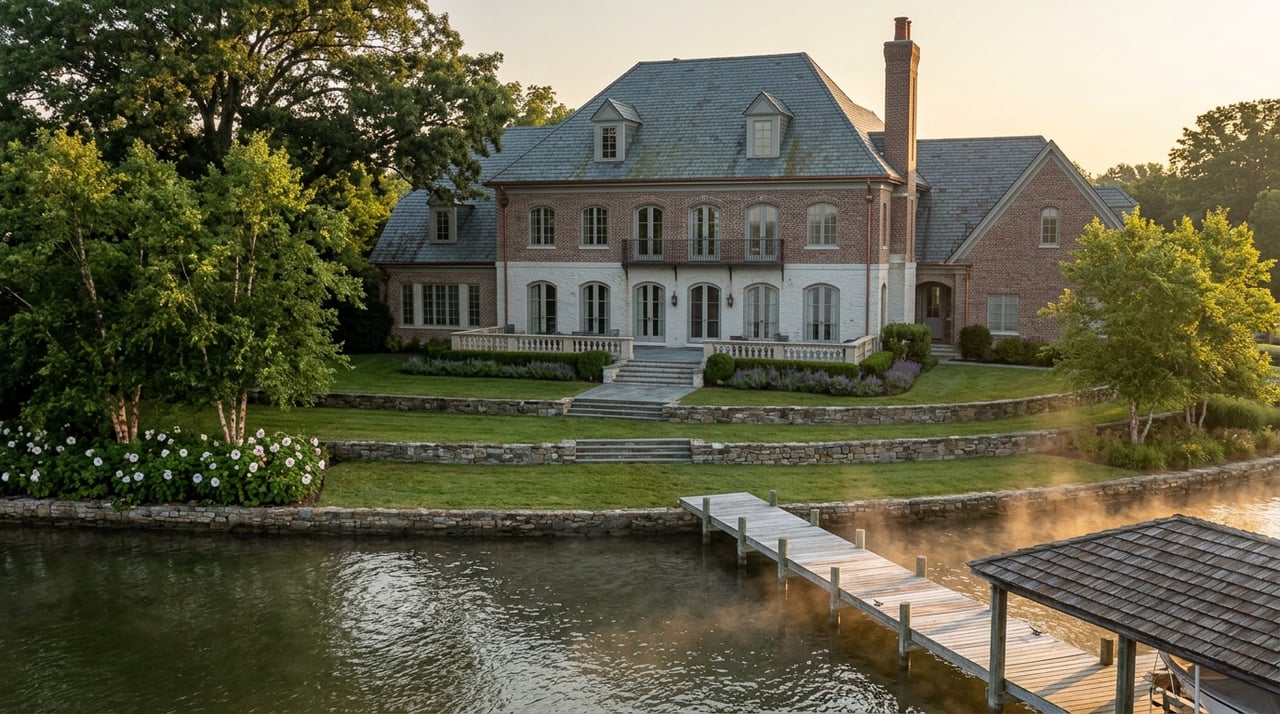
The Peninsula Listing Shows the Dock. The Deed Doesn't Include It.
August 27, 2026
August 27, 2026
A waterfront listing in The Peninsula usually leads with the dock. Deep-water access, a lift for jet skis, room for a 40-foot boat. It photographs well and it's often the reason a buyer calls in the first place. The dock permit and the club membership the neighborhood is known for are separate matters to verify before closing. Buyers should also confirm the homeowners association rules governing the lot.
Understanding how the dock permit, club membership, and applicable HOA rules work helps buyers plan for the paperwork before closing.
Lake Norman is a Duke Energy reservoir. Full pond is the point where the lake sits at 100 percent of capacity, roughly 760 feet above sea level.
The Point Owners Association says a buyer must submit an application to transfer the permit into the new owner's name. Buyers can ask about the permit status as part of due diligence.
Duke doesn't pre-approve lake structures before a sale. It only processes permit applications when someone submits one. If the ability to expand a single slip to two, cover an open platform, or add a larger lift matters to your plans, that has to be checked with Duke directly before it becomes part of your purchase decision, not after you've moved in and discovered the shoreline classification doesn't allow it.
Transferring the dock permit involves an application, a review period, and whatever compliance history the previous owner left behind.
Before writing an offer on a Peninsula waterfront home, ask the seller for three things: the Duke permit number or recorded shoreline agreement, as-built drawings showing the dock matches what was actually permitted, and written confirmation that the permit is transferable. If none of that exists, treat it as a negotiation point, not a formality to sort out later.
The Peninsula is often described as a golf and yacht community, as if those are one amenity. They're two separate private clubs with two separate membership processes, and living in the neighborhood qualifies you for neither automatically.
The Peninsula Club runs the golf course, tennis, pickleball, and swim facilities. Membership requires board and committee approval, three references, and a sponsor, according to the club's own membership FAQ, and the application takes several weeks to process. The club completed an $18 million renovation led by Beau Welling Design, which broke ground in October 2023 on a full re-grassing of the golf course along with new tennis courts, six pickleball courts, and a new golf pro shop. A member testimonial posted on the club's site this year specifically calls out the new pickleball courts and the new golf course, confirming the work has been finished and in daily use for some time now. If a golf or club-centered lifestyle is part of why you're buying in The Peninsula, verify the membership details before relying on them.
The Safe Harbor Peninsula Yacht Club is a different organization entirely, with its own clubhouse, roughly 405 wet slips, and its own membership tiers: Social, Yacht, and Corporate. Social membership carries a one-time initiation fee plus annual dues in the range of $2,000, and even that tier doesn't include a boat slip, just access to the pool, dining, and transient docking. If lake access through the yacht club matters to you, confirm which membership tier you'd actually need and what slip access it includes.
Budget the application timeline the same way you'd budget an inspection period.
The Peninsula operates under nine separate homeowners associations plus a master association, each covering a different section of the community. That structure means the covenants, dues, reserve study, and architectural review rules that apply to a home on one street may not be identical to the ones governing a home two streets over, even though both addresses say "The Peninsula" on the listing.
Requesting a generic HOA packet isn't enough. Ask specifically for the sub-association that governs the exact lot, along with its current budget, reserve fund status, and any pending special assessments. A well-funded reserve on the master association's books tells you nothing about whether the individual sub-HOA covering your block has the money set aside for road or common-area repairs.
A short list to work through with your agent and closing attorney before you're under a firm deadline:
None of this shows up in a walkthrough. All of it shows up in due diligence, and all of it is far easier to resolve before an offer than after one.
The house, water access, club membership, and HOA arrangements are separate matters to review when considering a home in The Peninsula. Buyers who treat the dock, the club, and the HOA as three things to verify independently close with confidence.
The neighborhood's appeal is real. Eleven miles of shoreline, a recently renovated country club, a working marina, and streets close enough to Cornelius that dinner at Hello Sailor or 131 Main is a short drive rather than a plan. None of that changes the fact that the paperwork behind it is layered, and layered paperwork rewards someone checking it early.
Who handles permits for docks on Lake Norman? Duke Energy Lake Services handles permitting for docks and piers on Lake Norman.
How should I check membership details for either club? Ask each club about its application process and fee structure.
What happens if a dock has no permit documentation? It becomes a due diligence issue rather than a post-closing surprise. Duke's transfer process will identify undocumented or non-compliant structures. Ask for documentation before closing and negotiate accordingly if it doesn't exist.
If you're weighing a purchase in The Peninsula and want a clear read on what actually transfers with a specific address, from dock permit status to which sub-HOA governs the lot, Rachel Mangiapane can help you sort the paperwork from the lifestyle before you're under contract. Let's Connect.
This article is general information, not legal, tax or financial advice. Consult a qualified professional about your situation.

Every client deserves an advisor who takes the time to understand the details before offering guidance. I believe the best decisions are informed decisions, which is why I approach every transaction with thoughtful preparation, local expertise, and careful market analysis. Whether you're buying your first home, searching for a waterfront retreat, or preparing to sell, I'm committed to providing personalized guidance and exceptional care so you can move forward with clarity and confidence.
Rachel Mangiapane
19826 NORTH COVE RD CORNELIUS NC 28031 OPEN DAILY: 9AM – 5PM